
- [email protected]
- Amherst, Massachusetts, USA
- Contact Us
Our Team
-
Liher > Our Team
Head Of LIHER
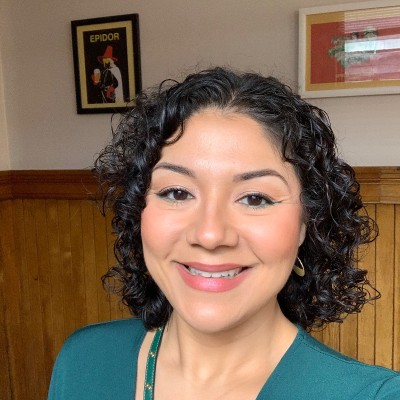
Airín Denise Martínez, PhD
Principal Investigator
LIHER is led by Airín Denise Martínez, a medical sociologist who integrates theories and methods in both the social and biological sciences, anchored in community engagement and participation to examine the social determinants of health. In particular, Dr. Martínez examines how laws, policies and institutional practices produce material and physical health conditions in vulnerable populations. She is currently an Associate Professor in Health Policy and Management in the Department of Health Promotion and Policy at the University of Massachusetts Amherst School of Public Health and Health Sciences. She started her research trajectory conducting a situational analysis of the transnational and global processes that transform lay health practices ofcomiendo bien(eating well) among diverse Latinx im/migrant families in San Francisco, with the intent of shifting dietary change research from acculturation analyses that not attributed dietary changes to the structural causes of produce cardiometabolic chronic disease such as housing, labor, and food assistance programs for children and families.
Her research trajectory has led her to co-creating interventions with community members and evaluating public health interventions that address structural sources of suicide among Massachusetts’ men, as well as culturally responsive programs that address healthy food access, diet quality and weight outcomes in Latina/o/x populations. For more information on Dr. Martínez, please visit her Research Trajectory here.
Team Behind LIHER

Naomi Guerrero Reyes
Doctoral Student
Naomi Guerrero Reyes is a doctoral student at the University of Massachusetts Amherst, School of Public Health and Health Sciences in Health Policy and Management. She is the first in her family to obtain a bachelor’s degree in public health from Westminster University in Salt Lake City, Utah. During her undergraduate years, she conducted research on assessing domestic violence during the COVID-19 pandemic, barriers to receiving aid, and experiences with domestic violence advocacy organizations among women of color living in Utah. During her time in the Summer Program for Undergraduate Research (SPUR) at the University of Utah, she did an extensive literature review on the association between acculturation, acculturative stress, and suicidal behavior among Hispanics in the US. For her senior capstone, she evaluated the awareness and knowledge of skin cancer in construction workers with an emphasis on Hispanic/Latinx workers in Utah which led her to present results at the Utah Public Health Association conference and receive 2nd place in best poster presentation. In her post graduate years, she worked as a Health Educator/Patient Navigator for Hispanic/Latinx cancer patients at the Huntsman Cancer Institute where she was able to identify and reduce barriers to help Hispanic cancer patients access healthcare.
- Health disparities / inequities
- Hispanic / Latina /o/x
- immigrant health
- health policy
- mixed methods

Ashleigh Sayer
Doctoral candidate
Ashleigh Sayer is a doctoral candidate in the Language, Literacy and Culture concentration in the College of Education at the University of Massachusetts in Amherst. Her research integrates health equity for immigrant adolescent students using participatory ethnography to understand their diverse academic experiences in Western Massachusetts. Alongside her research, she is a high school teacher for English language learners, a teacher trainer for the U.S. Department of State, and enjoys running, traveling and various adventures in her free time.
- English learners
- Adolescents
- Secondary Education
- Participatory ethnography
- Health Equity
- Intersectionality

Parastoo Dezyani
Doctoral candidate
Parastoo Dezyani is a doctoral candidate in Health Policy and Management at the University of Massachusetts Amherst. Her research integrates gambling epidemiology and health services, applying longitudinal cohort methods to model trajectories of gambling severity and its bidirectional links with mental health and social determinants. As a biostatistician with the SEIGMA team, she analyzed statewide longitudinal surveys and built reproducible analytics pipelines for high-dimensional data. In related public health work, she has contributed to CDC-funded, participatory transcreation of the MassMen digital platform for Massachusetts Latinx men and coauthored PRISMA-guided reviews that map intervention strategies and implementation gaps in U.S. Latinx suicide-prevention. Trained as an industrial engineer with a health systems concentration, she has developed deep-learning models for surgical action recognition and biomedical imaging, including a peer-reviewed publication in laparoscopic video analytics. She also serves as a teaching assistant for undergraduate public health courses. Across projects, her goal is to pair rigorous methodology with practical impact to inform prevention and treatment services and advance equity in population health.
- gambling epidemiology
- problem gambling
- health services research
- population health
- social determinants of health
- mental health comorbidity
- health equity
- machine learning

Samantha Kloft
Doctoral candidate
Samantha Kloft is a doctoral candidate at the University of Massachusetts Amherst School of Public Health and Health Sciences, in Health Policy and Management. Prior to her doctoral studies, she earned a Master of Public Health in Community Health Education from the University of Iowa College of Public Health. After completing her MPH, she served two years in the Peace Corps in Cambodia, working alongside local partners on education and public health initiatives. When the COVID-19 pandemic began, she returned to the United States and joined a Midwest public health department, where she supported pandemic response efforts and gained firsthand perspective on U.S. public health challenges. Drawing on these experiences, her dissertation uses mixed methods and an intersectional lens to examine trust in public health authorities and strategies to strengthen it through collaborative approaches to preparedness and response. This work has highlighted the role she sees for herself and other public health authorities in building and sustaining trust, reinforcing her commitment to community-centered, engaged public health practice. In addition to her research, Samantha teaches at UMass Amherst, where her courses focus on student wellbeing and resilience, fostering supportive and inclusive learning environments.
- Health Equity
- Trust
- Public Health Policy
- Public Health Preparedness
- Crisis Response
- Intersectionality
- Mixed Methods

Vishal Shetty
Doctoral candidate
Vishal Shetty is a doctoral candidate in the Health Policy and Management program at the University of Massachusetts Amherst. His work focuses on the application of machine learning and natural language processing methods in diverse healthcare settings, particularly to understand complex social phenomena that can be gleaned from text generated by patients and healthcare providers. Before his doctoral training, he started his journey in healthcare through local work in community settings and health system strategy. Through this collection of experiences, he combines a technical knowledge of machine learning and NLP with a grounded perspective on the priorities of patients, healthcare providers, and health systems. At the same time, he’s constantly reevaluating my priors in the face of this dynamically shifting space and is driven by understanding how health systems can leverage artificial intelligence toward the improvement of patient care quality and outcomes.
- Machine learning
- natural language processing
- health informatics
- patient-clinician communication
- patient portal messaging
- electronic health record data
Joyce Mogaka
Ph.D. student
Joyce Mogaka is a Ph.D. student in Public Health, focusing on Health Policy and Management. She has over 15 years of experience in Public Health through implementing and supporting community-driven initiatives through program planning, implementation, monitoring and evaluation as well as proposal and grant writing in Africa and the United States.
Joyce holds a Master of Science in Global Health Policy and Management from Brandeis University, U.S., and a Master of Arts in Community Development from Daystar University, Kenya. In addition, she received a Bachelor of Arts in Sociology and Psychology Major from the University of Nairobi and a Bachelor of Science in Medical Laboratory Sciences from the Technical University of Kenya.
Her research interests include health and healthcare disparities, infectious diseases epidemiology, women and children’s health, immigrant health, community-based participatory research, and result-based monitoring and evaluation.
She also loves taking nature walks, cycling, and catching sunsets.
- Black immigrant
- children
- women
- health disparities
- quality measurement
- health services access and utilization
- social determinants of health
- community engagement